

Ever since I could hold a pencil, not a single sheet of paper in the house was spared from my signature scribbles. Although I am pretty aware of my progression as an artist, I somehow missed one obvious and key motivator: my father. A recent interview with my dad, coupled with intrapersonal excavation and research revealed how pivotal his encouragement of illustration influenced my affinity for art.
I remember late night art projects in high school often left my hand cramped and back sore, my eyes dry and head throbbing. Just as I felt like giving up and piercing my canvas with a palette knife, my dad would wander over and offer suggestions or ask how my project was coming along. His curiosity and calm presence, intentional or not, helped me through grueling art courses. Growing up, he never emphasized his history as an artist. I am now old enough to label myself an adult, and in turn, my dad divulges more details about his past, especially his time as a prisoner-of-war.
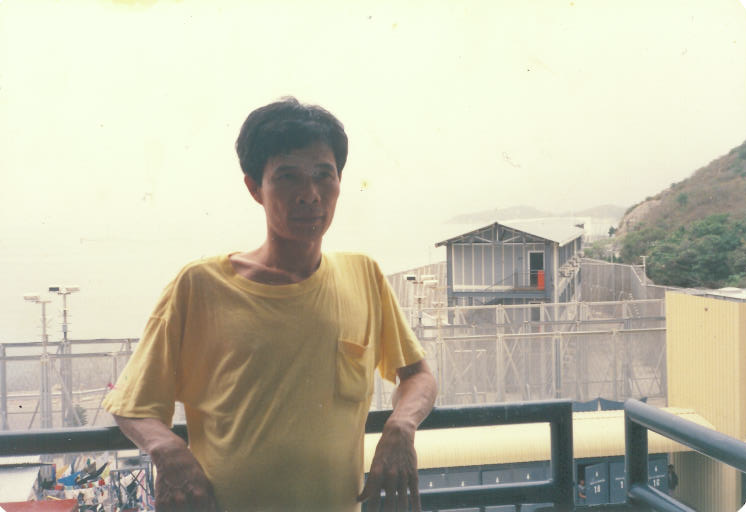
He was imprisoned in 1977 for serving as a South Vietnamese Army Ranger during the Vietnam War. He described the hierarchy of the POW camp as loosely structured. Ranks and titles were unchallenged, but rules seemed flexible and arbitrary. On the first day of camp, prisoners were singled out for specific skill sets, such as mechanics, artists, doctors, etc. I know what you’re thinking: One of these is not like the other. Well, photos were a rarity after the war. Pocket-sized, black and white, and tattered photos usually needed restoration, so my dad was tasked with recreating large portraits of communist members, as he was the better of two artists in the camp.
The head of several POW camps in the area was a Viet Cong by the name of Mr. Coi, who procured favors in exchange for portraits from my dad. In his weekly or monthly visits, Mr. Coi would often make a point to check on my dad. If my dad was discovered to be sick or ailing, Mr. Coi would find a prisoner with Western connections to retrieve medicine. Once, my dad witnessed Mr. Coi beat a guard unconscious for no particular reason. They formed an unlikely and tense bond through long bouts of portrait sessions.
My dad described a time when he was harassed by a particularly malicious guard. The guard dangled a club from his hand, toying with it as his gaze dared my dad to challenge him. “If you hit me, I warn you, I will fight back,” my dad declared. The man smirked and ordered another guard to beat my dad behind the building. My dad said sternly, “If I have done something wrong, you can confine me or lengthen my sentence, but you have no right to beat me.” Ignoring all protest, the guard motioned for him to be taken away. Once out back, my dad pleaded with the other guard to be reasonable, there was no sense in doing this, and Mr. Coi would be upset. The guard told my dad to sit down and be quiet. The two sat together for nearly half an hour before my dad was allowed to return to his cell. He believes the weight of Mr. Coi’s name was enough to dissuade the guard from harming him.

Ten years passed. Towards the end of 1987, one week prior to his release, my dad was called to the filing office. The prison guards were, not surprisingly, corrupt. A popular scheme to increase profits involved altering the dates of when prisoners began serving time. When my dad reviewed his prison terms, he noticed they changed his date of entry from 1977 to 1979. The guards informed him he still needed to complete two more years in prison. Both my father and the guards knew the exchange that was to take place. The guards would give my dad one week to go home, “gather his things,” and return with a bribe for the guards to correct the date. Determined, my dad marched to Mr. Coi’s office and explained the situation.
With a cigarette poised between two fingers, Mr. Coi said, “And?”
“What do you mean ‘and’? This is terrible! I have served my time!”
“Fine, fine,” said Mr. Coi as he fished a pen from my dad’s shirt pocket. He corrected the date with a swish of his pen and motioned for the guard at the door to accompany my dad back to the filing office. “You tell them this date is final.”
My dad fondly recalled Mr. Coi as, “…a fierce man who would often beat his prisoners and guards, but he took a liking to me. If not for him, I would not have lasted very long in there. For that, I am grateful.”

Nowadays, his reluctance to draw again is understandable, but sometimes I see a twinkle in his eyes when he watches me paint. I notice his fingers twitch and his hands curl reflexively. I watch as the hard lines in his cheeks melt into a prideful smile.
Art is not simply an outlet for creativity and expression, sometimes it is a flotation device that connects us to humanity. I know my love of art and illustration stems from my father’s encouragement as certain as I know his life was saved through his drawing sessions with Mr. Coi. For that, I am grateful.


 Binh Siu